







Your savings could be earning ₹4,482 more each year
Average HDFC balance of ₹62,000 earns more at Kotak's 7.1% than HDFC's 3.5%.
But, check the minimum balance requirement before switching. Supported by 4 signals.

AI product design, Interaction design, Trust & safety, Prototyping
available bank balance

3 new transactions made today
₹17,985.00
 02 nov
HDFC BANK

₹1,230.00
02 nov
₹19,251.96
02 nov
Evolve Guide: Navi
 This insight is strongly supported
 Search past conversations
Average HDFC balance of ₹62,000 earns more at Kotak's 7.1% than HDFC's 3.5%.
AI-generated insight. Verify independently before acting.

Specializes in high-yield savings optimization and fixed deposits. 8 years expertise in Indian private banking.
Confidence Lift
+30%
Confidence lift pre/post viewing explainability widgets.
Comprehension
85%
Could explain the AI's recommendation clearly.
Engagement rate
75%
Engaged with Explain or Source indicators before acting.
Concept validation
55%
Preferred segmented Insight pattern over baseline layouts.
Now in validation. The MVP is in ongoing user testing to assess market fit: iterating continuously on real feedback rather than assumptions.
Context
Who this is for, and where today's AI advice loses their trust.
Introduction
Set the scene: the product, my role and the timeline.
About Evolve Money
Evolve is a social finance app for young adults in India. It makes managing money feel less like a solo journey, helping first-time earners budget, save, invest, and learn from others while building confidence with money.
My Role
Founder & Product Designer. Led the end-to-end process solo - research, AI system spec, interaction design, voice, failure states, and prototyping.
Timeline
2 months · Students & early professionals, India · MVP in validation
Unpacking the Problem
Find exactly where the current AI overlay loses the user.
Problem in current experience
 Component Note
AI Insights Overlay (Closed State)
Sits across the app surface and suggests contextual actions to help users improve their financial standing.
 Personal data used without context
available bank balance

3 new transactions made today

Switch to Kotak for Better Returns
Based on your HDFC account · 92% match



₹17,985.00
 02 nov

HDFC BANK 
₹1,230.00
02 nov
₹19,251.96
02 nov
Difficult to show multiple insights
Requires tap to reveal details
Clickability is not visually apparent
Unclear dismiss permanence
 Component Note
AI Insights Overlay (Expanded State)
Tapping the closed state expands it to reveal detailed explanation, source data, and the AI confidence
Source not verifiable by user
No primary CTA after the pitch
available bank balance
3 new transactions made today

Switch to Kotak for Better Returns

₹4,482
More interest per year
by switching your idle savings balance from HDFC (3.5%) to Kotak ActiveMoney (7.1%).

₹17,985.00
02 nov
HDFC BANK
₹1,230.00
02 nov
₹19,251.96
02 nov
No disclosure of switching costs or tradeoff
No timestamp on calculation or balance
Mimics an insight format but functions as a sales pitch
No “here’s what we looked at to calculate this”

Closed state. Scroll to open the overlay.
16
Interviews conducted
128
Surveys conducted
6
Field Observations
Recommendation Without Direction
“I know I should switch, but what do I actually do next?”
The advice showed what to do, but not how to act on it.
Hypothesis
If recommendations explain how to act, users will feel more confident taking the next step.
Lost in Financial Jargons
“I don’t even know what half of this means.”
Financial jargon made the advice harder to understand and evaluate.
Hypothesis
If financial terms are explained in plain language, users will better understand the advice before deciding whether to act.
Conflicting Advice
“The app says one thing, my friend says another. Who do I trust?”
Conflicting advice made users unsure what to trust.
Hypothesis
If AI explains the trade-offs and lets users question the advice, they can better decide what’s right for them.
The Human Check
“Can I just talk to someone before I do this?”
Users wanted human reassurance before making higher-stakes decisions.
Hypothesis
If users can question and discuss advice with an accountable human expert, they’ll feel more confident making a decision.
The AI Feels Distant
“It just feels like I’m talking to a bot.”
The interaction felt functional, but impersonal.
Hypothesis
Giving the AI a recognizable personality and presence could make conversations feel more natural and engaging.
Problem Statement
Turn the research into one problem worth solving.
The overlay above isn't broken by accident, it's what happens when an AI feature is built to sound helpful without being checkable. Users are willing to try AI for money decisions. What stops them is that trying isn't the same as trusting.
User Opportunity
Novice investors are open to AI for financial advice
Novice investors are open to AI advice. Human advisors feel costly and intimidating, making AI their only accessible option.
User friction
Personalisation Didn’t Make the Advice Trustworthy
Used real data but lacked transparency. Framed the switch as all upside with no fees, tradeoffs, timestamps, or reasoning behind the confidence score.

How might we design the presentation of AI-driven financial recommendations so that novice investors can understand the reasoning behind the advice, evaluate trade-offs with confidence, and take appropriate action without needing to blindly trust the system

Principles
The rules every later design decision is checked against.
Design Principles
Turn user hesitations into rules for every design choice.
Each hypothesis revealed a different reason users hesitated to trust AI financial advice. I translated those gaps into four principles that guided every design decision that followed.
Actionable next steps
Path over point
Every recommendation pairs a clear next step with the reasoning behind it.
Lost in financial jargon
Plain language over jargon
Terms are explained in context so users can retell the advice confidently.
Conflicting advice
Question the advice
Every recommendation pairs a clear next step with the reasoning behind it.
Human trust gap
Keep a human reachable
For high-stakes decisions, a visible path to a human advisor closes the trust gap.
Ideation
Four design problems, each explored, tested and narrowed to one direction.
Content & Voice
Decide how the AI should talk about money.
The recommendation pulled from the user's real data. But the language flattened every nuance into a single confident line. No trade-offs. No uncertainty. Just a directive dressed as advice
Decoding the Problem
Frames only the upside
Pushes action too early
Untraceable source
Confidence without meaning
Benefit without cost
Switch to Kotak for Better Returns
₹4,482
More interest per year
by switching your idle savings balance from HDFC (3.5%) to Kotak ActiveMoney (7.1%).

Three directions
The next step was content and voice. I took the same Kotak recommendation and wrote three genuinely different versions. Not rewrites, but different assumptions about how financial advice should speak to someone making a real decision.
Led with reasoning before making the recommendation
Your savings could be earning ₹4,482 more each year
Your average HDFC balance is ₹62,000. At Kotak's current 7.1% rate, that balance could earn more than HDFC's 3.5%.
worth Considering:
Kotak Active Money
But
Check the minimum balance requirement before switching
Voice:
Factual, transparent, restrained
Make the AI sound like an advisor opening a conversation rather than delivering a verdict
There's an opportunity to earn more on your savings.
Based on the balance you usually keep in HDFC, Kotak ActiveMoney could earn your around ₹4,482 more per year.
But higher returns aren't the only thing that matters. Your minimum balance, fees, and how you use the account could change whether switching makes sense for you.
Want me to compare the trade offs?
Voice:
Warm and approachable, but not overly human
Led with reasoning before making the recommendation
Switching to Kotak could earn you more interest, but only if the higher balance requirement works for you.
What will you gain
₹4,482 more / year
Higher interest on your current savings balance.
Why this came up
Your current HDFC balance + current bank interest rates.
Voice:
Balanced & Neutral
Testing them
The next step was content and voice. I took the same Kotak recommendation and wrote three genuinely different versions, not rewrites, but different assumptions about how financial advice should speak to someone making a real decision.
10
Participants
Active savers and investors
1
Recommendation
HDFC → Kotak, ₹4,482/yr
3
Voices tested
Evidence, Conversational, Trade-Off
1 → 3
Exposure
One voice first, then all three ranked
We measured
Comprehension
“What is this telling you to do, and why?”
Trust
“How much do you trust this advice?”
Action readiness
“Would you act on this now?”
Tone
“Describe it as a person.”
Direction 01
Evidence First
Trusted, but didn't move people.
High trust, low action. Caveats made people pause.
Direction 02
Conversational-First
Felt human, but the point got lost.
Warm, but the soft opening buried the recommendation.
Direction 03
Trade-Off Upfront
Clearest, but least trusted.
Fastest to understand, but read like a spec sheet.
No direction won on everything: trust, warmth and clarity each came from a different voice.
From Trade-Off Upfront
Structure
Condition and trade-off stated upfront
From Conversational-First
Warmth
Carried by who's speaking, not the wording
Final voice
Mentor Voice
Clear advice from a warm, human guide
Structure and warmth are separable
They can sit on different layers.
Warmth in wording is fragile
"Want me to compare?" read as withholding.
Evidence First played it safe
Never failed, never fixed "AI feels distant".
Sources and trade-offs
Evidence First's caveat-as-afterthought (reads as disclosure, not guidance); Conversational-First's soft opening (warmth shouldn't delay comprehension).
The final voice
 Mascot for Warm & Present
Opportunity Over Action
Make the reasoning inspectable
Trade-Offs Before Actions
A human aways reachable
Proof stays one tap away
A persistent presence that carries the warmth, so the copy stays direct

Your savings could be earning ₹4,482 more each year
Your average HDFC balance is ₹62,000. At Kotak's current 7.1% rate, that balance could earn more than HDFC's 3.5%.
worth Considering:
Kotak Active Money
But
Check the minimum balance requirement before switching
 Talk to expert
Voice:
Factual, transparent, restrained
The mentor voice adapts to the moment: explaining, cautioning, guiding, or listening, so the advice stays factual while the experience stays warm.
Mascot
Give the AI a name and a face without faking a human.
The advice needed personality, but not at the cost of credibility. I explored a mascot that could bring warmth and continuity to the experience while keeping financial recommendations direct, neutral, and grounded in evidence.
Naming
A human name for familiarity, or a role-based tag for clarity?
Direction 1
Human Identity
Direction 2 · Selected
Role Based Persona
Question
Names
Strengths
Risks
Verdict
A role beat a human name. But "Evolve Guide" was clear and forgettable, so I looked for a name inside the role.
Look and feel
I explored Navi as more than a mascot. He needed to feel like someone users could comfortably turn to when financial decisions felt confusing: approachable enough to ask, experienced enough to trust, and expressive enough to make AI guidance feel less transactional.
Explored
Chose
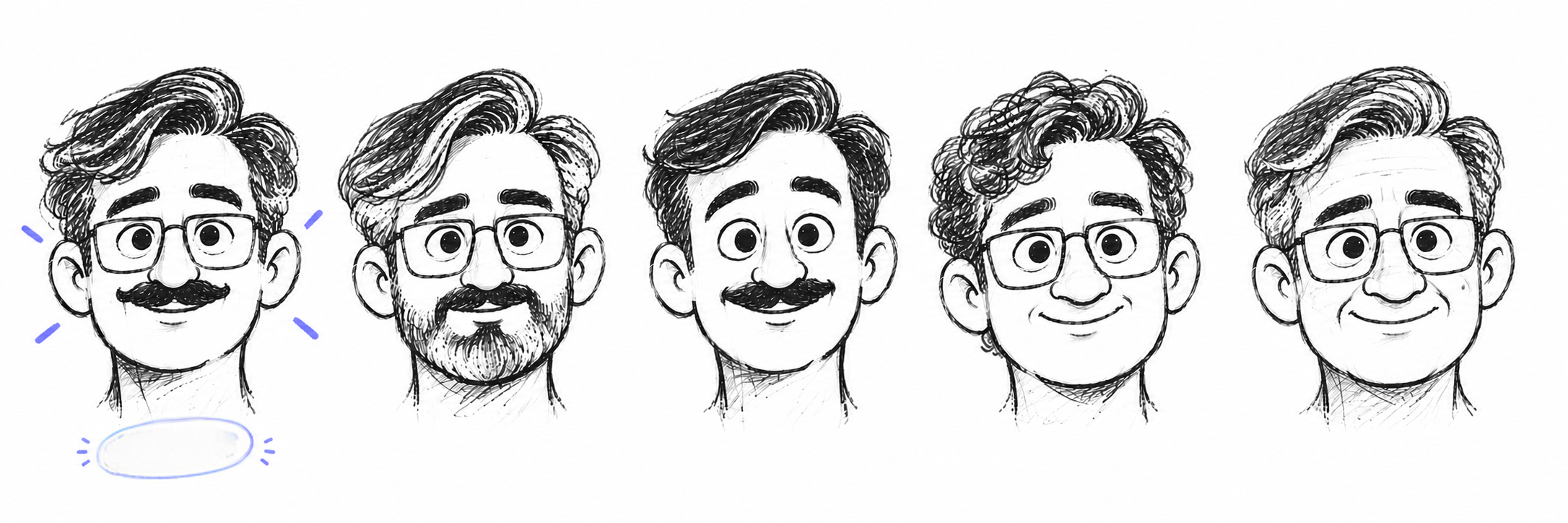
Experienced, warm, and recognizable.
Explored
Chose
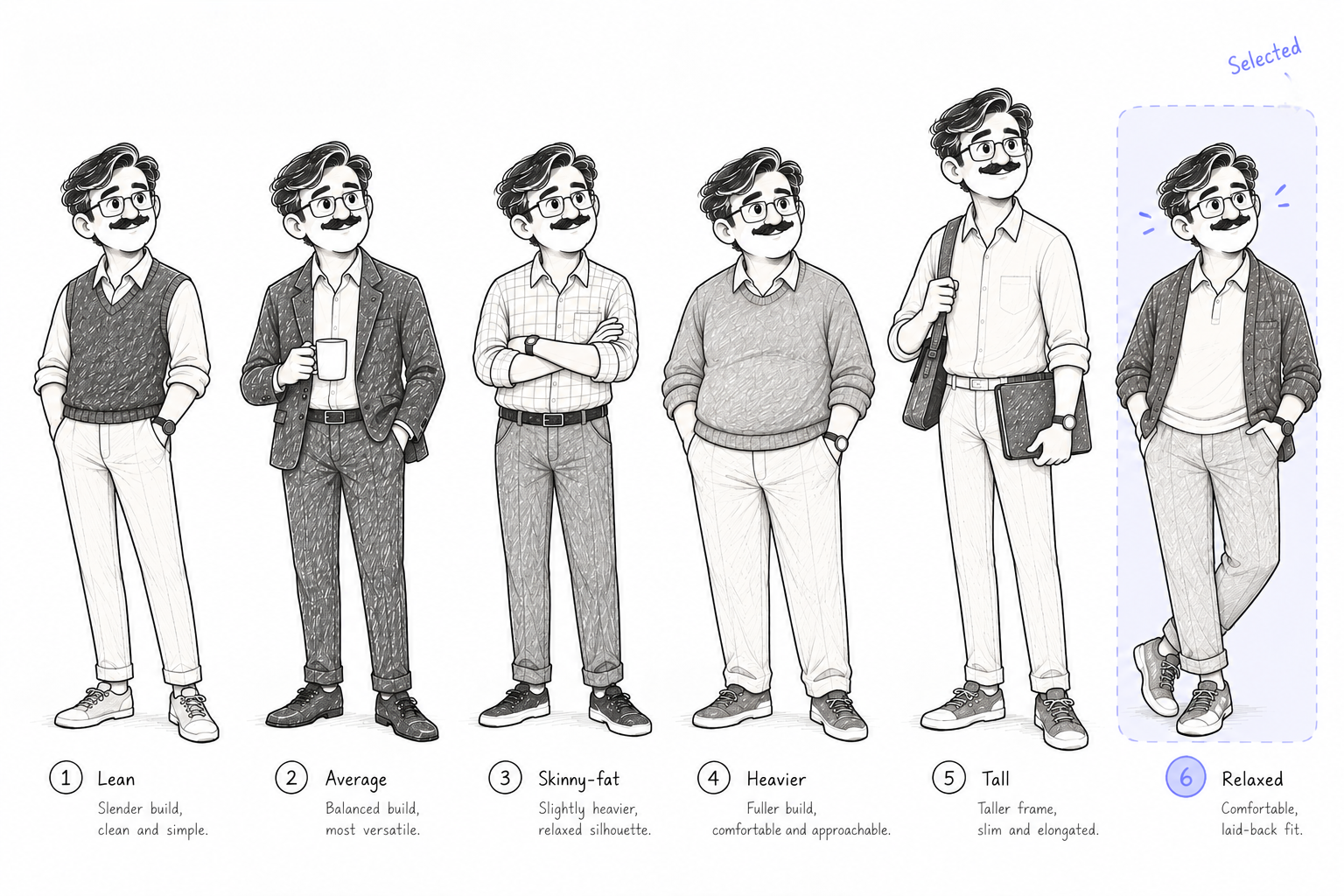
Relaxed, grounded, and approachable.
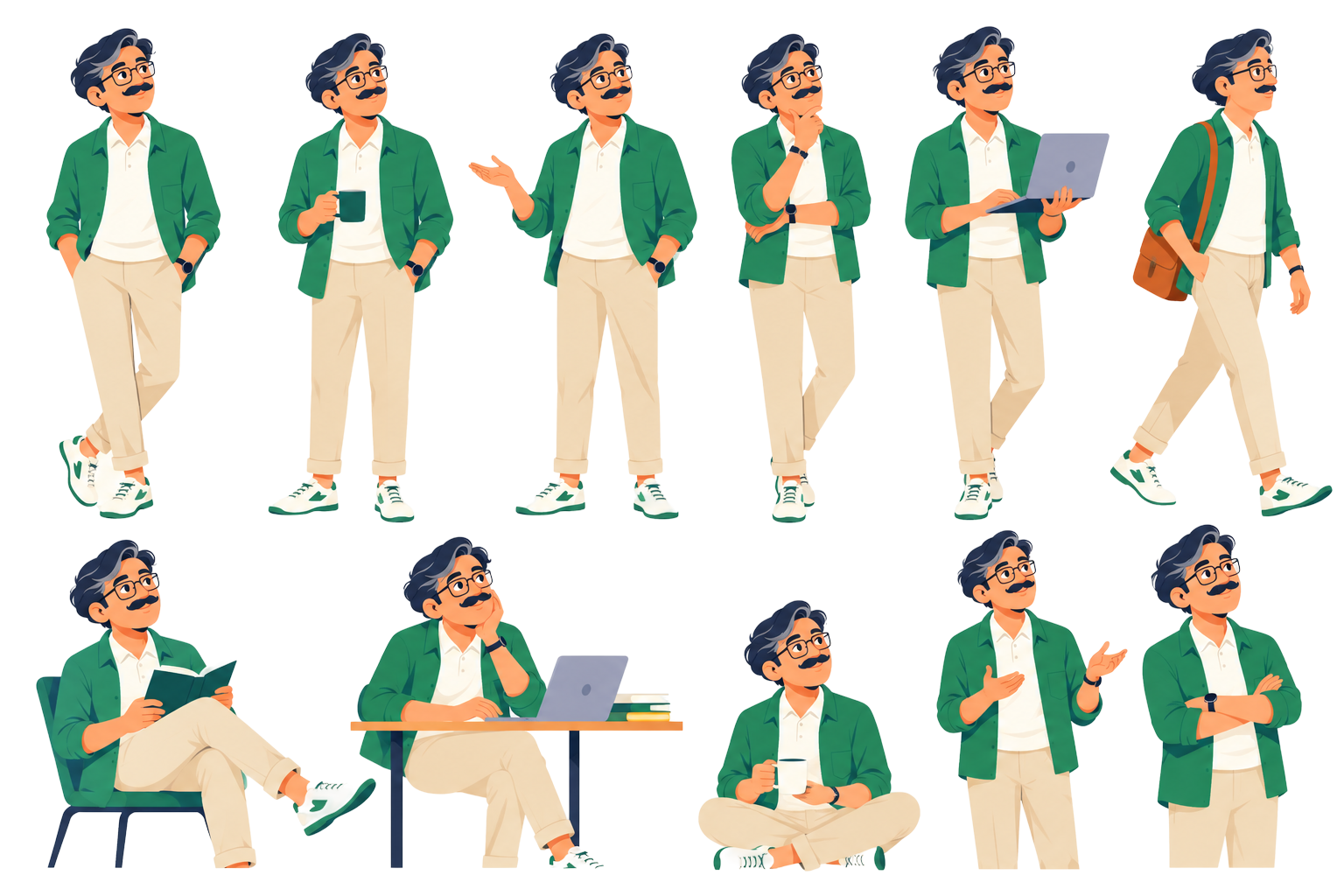
Moments
Result
Poses signal
Role
AI Confidence Cue
Make the AI's confidence score mean something.
AI confidence was easy to show as a number, but harder to make actionable. I explored how to communicate it visually so users could quickly gauge certainty and decide when to trust or question a recommendation.
Rather than treating confidence as a percentage users had to interpret, I explored ways Navi could translate uncertainty into cues users could recognize at a glance, without implying that his expression itself was proof.
Direction 1: Expression
Navi's expression changes with certainty.



Direction 2: Language
Navi changes how confidently he phrases guidance.
“This is strongly supported”
High Confidence“This could work”
Medium Confidence“I'd verify this first”
Low ConfidenceDirection 3: Evidence Cue
Navi's posture and gestures shift with AI certainty.
Switch to Kotak for Better Returns
● Supported by 4 signalsTry a recurring SIP top-up
● Supported by 1 signalI moved forward with language and evidence cues as the clearest way to communicate AI confidence. Changing Navi's expression for every confidence state added another visual signal to an interface that already contained recommendations, trade-offs, and supporting information.
Instead, confidence would be communicated through what Navi says and what evidence he points to, keeping the interface lighter while giving users something concrete to evaluate.
“This is strongly supported”
High ConfidenceSwitch to Kotak for Better Returns
● Supported by 4 signalsAI Insight Layout
Choose where AI insights should live in the app.
The provenance layer gave users a clear reason to trust or question each recommendation, turning AI output into something they could evaluate on their own terms.
available bank balance
3 new transactions made today
₹4,482
more interest per year
by switching your idle savings balance from HDFC (3.5%) to Kotak ActiveMoney (7.1%).
₹17,985.00
02 nov
HDFC BANK
₹1,230.00
02 nov
₹19,251.96
02 nov
available bank balance
3 new transactions made today
This insight is strongly supported
Your savings could be earning ₹4,482 more each year
Average HDFC balance of ₹62,000 earns more at Kotak’s 7.1% than HDFC’s 3.5%.
But, check the minimum balance requirement before switching. Supported by 4 signals.
Rates were checked today. The gap between 3.5% and 7.1% is large enough to matter on your average balance.
Kotak Active Money has a minimum balance requirement. Check that before you switch.
₹17,985.00
02 nov
HDFC BANK
₹1,230.00
02 nov
₹19,251.96
02 nov
available bank balance
3 new transactions made today
₹17,985.00
02 nov
HDFC BANK
₹1,230.00
02 nov
₹19,251.96
02 nov
Savings insight
₹4,482
more interest per year
by switching your idle savings balance from HDFC (3.5%) to Kotak ActiveMoney (7.1%).
available bank balance
3 new transactions made today
₹17,985.00
02 nov
HDFC BANK
₹1,230.00
02 nov
₹4,482
more interest per year
Anchored to this HDFC balance. Switching idle savings to Kotak ActiveMoney (7.1%) from HDFC (3.5%) could earn more.
₹19,251.96
02 nov
8
Participants
Each tried every design
4
Interaction models
Counterbalanced order
5
Tasks per model
Scored, not preferred
4
Scenarios
Equivalent, so no recall
No single layout won everything; each solved a different part of the decision.
Scores are participants (out of 8) who completed the task. Total bars show success across all 40 tasks.
Evolve Guide: Navi

This insight is strongly supported
Your savings could be earning ₹4,482 more each year
Average HDFC balance of ₹62,000 earns more at Kotak’s 7.1% than HDFC’s 3.5%.
But, check the minimum balance requirement before switching. Supported by 4 signals.
What if I don’t switch
You’d continue earning 3.5% at HDFC, missing out on roughly ₹4,482 per year.
Rates were checked today. The gap between 3.5% and 7.1% is large enough to matter on your average balance.
Kotak Active Money has a minimum balance requirement. Check that before you switch.
AI-generated insight. Verify independently before acting.



 Confidence Stated UpfrontCase stated upfront with minimal toDoubts stated upfrontPossible doubts and concern stated upfrontOption to consult an human alway available upfront
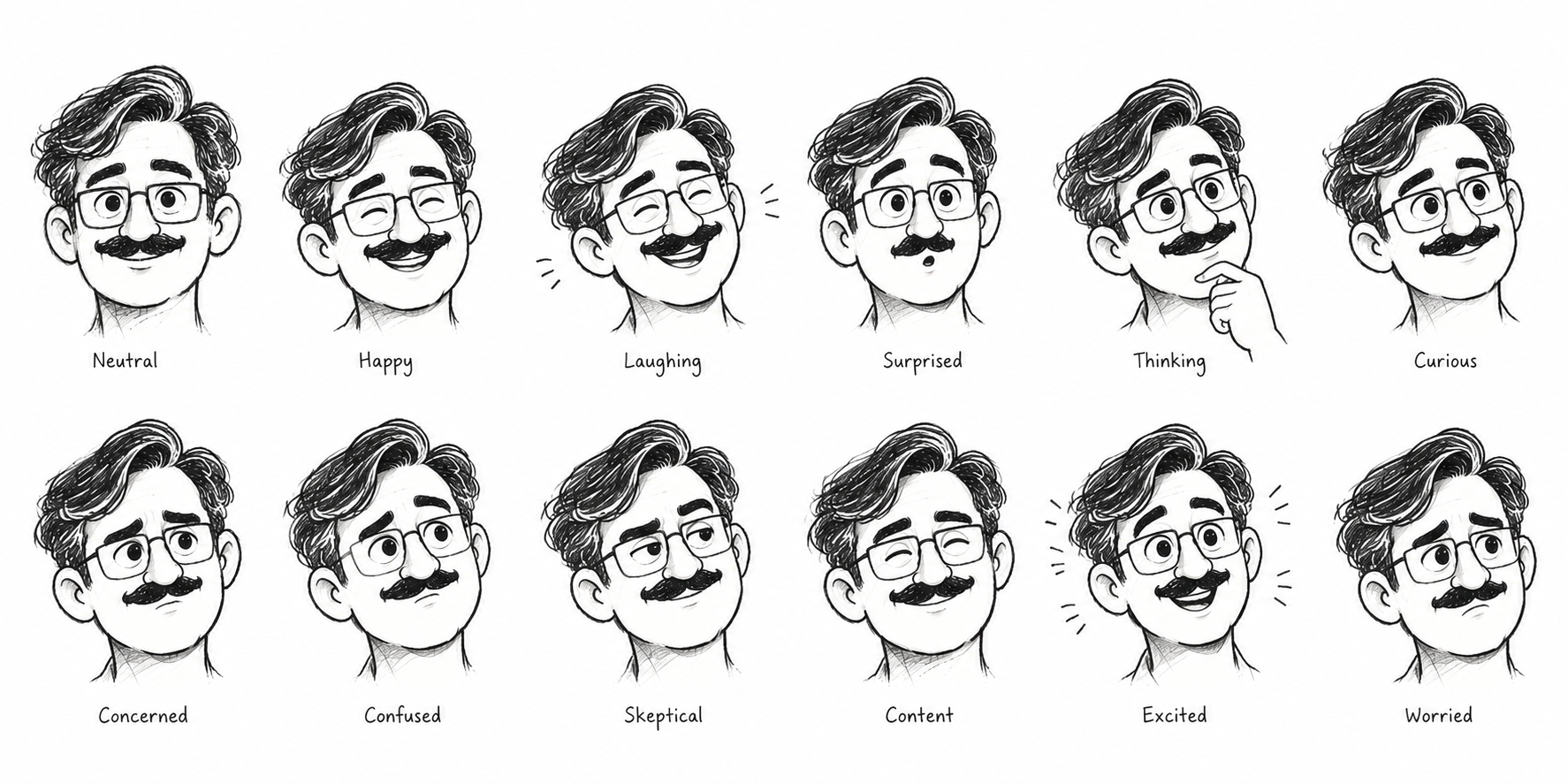
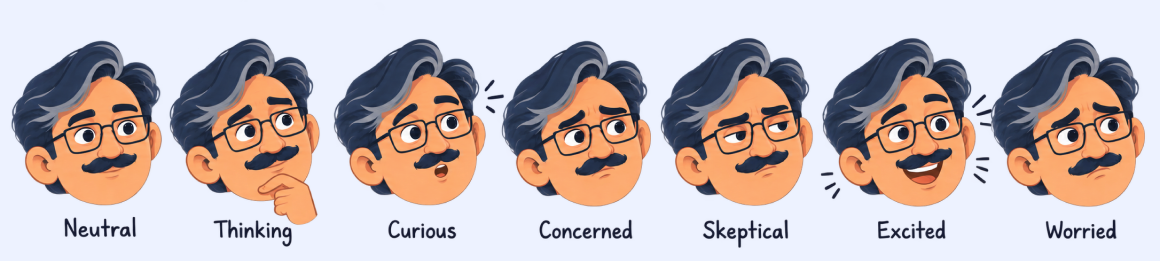
Supporting components extend the conversational direction by helping users navigate multiple insights, understand confidence at a glance, and read Navi’s intent through a clear expression system.
A compact insight stack surfaces additional recommendations without interrupting the conversation with overlapping dialogs.
A clear confidence spectrum shows how strongly each insight is supported, helping users decide when to act and when to verify.
This insight is strongly supported
Your savings could be earning ₹4,482 more each year
Average HDFC balance of ₹62,000 earns more at Kotak’s 7.1% than HDFC’s 3.5%.
But, check the minimum balance requirement before switching. Supported by 4 signals.
You’d continue earning 3.5% at HDFC, missing out on roughly ₹4,482 per year.
This could work
Your savings could be earning ₹4,482 more each year
Average HDFC balance of ₹62,000 earns more at Kotak’s 7.1% than HDFC’s 3.5%.
But, check the minimum balance requirement before switching. Supported by 4 signals.
Worth checking the catch first. The upside is real, but the minimum balance may not fit every month.
I’d verify this first
Your savings could be earning ₹4,482 more each year
Average HDFC balance of ₹62,000 earns more at Kotak’s 7.1% than HDFC’s 3.5%.
But, check the minimum balance requirement before switching. Supported by 4 signals.
I’d treat this as a lead, not a decision. Verify the rate and balance rules before moving money.
Navi’s expression layer mirrors the tone of each moment, making the assistant feel more responsive while helping users interpret its intent at a glance.
User Testing
Checking whether the assembled experience actually earns trust.
Validation
Test whether the assembled experience earns trust.
Voice and layout were tested separately, but neither revealed how Mentor tone, Navi, the confidence spectrum, and the insight stack worked together. This round tested the complete experience with a new cohort, navigating the flow independently without facilitator guidance.
Method & criteria
20
Participants
First-time earners, India
1
Full prototype
Tested end to end
5
Tasks
Unmoderated, then a survey
0
Prior exposure
None had seen earlier versions
Findings
“It’s not telling me to do something, it’s telling me why I might want to.”
Participant, Full system Validation85%
17 of 20 participants (85%) could independently explain what Evolve recommended and why, without prompting.
+30%
Average confidence rose from 2.6 to 3.4 after participants explored an explainability widget, showing how verification helped build trust.
75%
15 of 20 participants opened Explain or View Source before deciding, showing they wanted evidence rather than relying on Navi’s tone alone.
55%
11 of 20 preferred segmented insights, leaving its effectiveness an open question.
Synthesis
The problem statement asked for advice users could evaluate, not just receive, and the numbers here answer that directly.
Comprehension and engagement moved together: people weren’t just understanding the recommendation, they were checking it before acting on it, which is the behavior the whole provenance layer was built to produce.
The 55/45 split on layout is the honest exception. It’s a reminder that validating the ideal path isn’t the same as validating the edges, which is exactly what the next section takes on.
System
Designing for when the AI is wrong, unsure or out of scope.
Failure States
Design for when the AI is wrong, unsure or off-limits.
Trust isn’t built on the ideal path alone. In finance, the experience must remain clear and responsible when data is stale, confidence is low, experts disagree, or a request falls outside what we can legally provide.
If rates are older than 7 days, show balances but don't recommend a switch.
Rates last checked 12 days ago. Refresh before moving money. Comparison hidden until then.
A 0.2% gap isn't a “boost your savings” headline. No dramatizing a rounding error.
This difference is small. Transfer friction may eat the gain. Not recommending a move.
Stock picks, insurance, loans, crypto: hand off to Learn or a human expert. Never improvise.
I can’t advise on that. I can show a beginner explainer, or you can book a verified expert.
If sources conflict (3 vs 6 months’ emergency fund), show both. No fake certainty.
Two experts disagree on emergency-fund size. Here’s both. Your call.
A user flag hides the suggestion, logs it, and pauses that rate until a human checks it.
Thanks, we hid this suggestion. We won’t use that rate until it’s checked.
Disclosures sit on the action itself: not advice, which data was used, and that Evolve doesn’t earn from it.
Not financial advice. Using your linked HDFC & Kotak balances. Evolve does not earn if you switch.
Reflection
What I'd keep, and what I'd do differently next time.
Closing the Loop
Lessons I'm taking into the next project.
01
MEASURE
A design can win one and lose the other two. Conversational won not because it scored highest everywhere, but because it was the only direction that let a real doubt get resolved without the user leaving the screen.
02
EMBODY
The mentor tone only worked once it had somewhere to live. Navi's persistent presence carried the warmth, not the copy itself, which stayed direct and factual throughout.
03
VALIDATE
It assumes advisors respond quickly and are available on demand. With more time, I’d validate that against real advisor capacity before treating “always reachable” as a solved promise.
04
SEQUENCE
Working solo across research, AI spec, voice, and interaction in two months meant the failure-state work happened after the ideal path was already designed. Sequencing it earlier next time would change how the ideal-path screens are built, not just what sits behind them.
Made this far?
If this way of turning complex product questions into clear, useful experiences resonates, let’s talk.